







Husk Ventures (Cambodia) Co. Ltd.
HUSK is a Phnom Penh-based company that produces organic biochar, carbon-based fertilizers, and biopesticides to enrich the soil in farming communities in Cambodia.
Business CaseThe ASEAN Circular Economy Business Alliance (ACEBA) is a dynamic and growing ASEAN-centric, business-led alliance focused on advancing the circular economy transition in Southeast Asia. Its mission is to drive business action through peer learning, knowledge sharing, networking, and advocacy.
Read More about >About ACEBAACEBA is a responsibility initiative of and for businesses and industries in Southeast Asia. It unites organizations and enterprises committed to leading by example in adopting circular economy solutions tailored to the region's needs, and benefiting businesses, governments, and communities.
Country leads are business membership organizations operating in ASEAN member states. They represent ACEBA within their home countries, encourage national business participation, and lead national advocacy and support efforts.
Founded in 1903, the Cebu Chamber of Commerce and Industry (CCCI) is a civil service organization (CSO) and business membership organization (BMO) composed of businessmen, merchants, professionals, and entrepreneurs. CCCI is one of the largest and most prominent local business service organizations in the Philippines, with over 800 member companies and business associations coming from various sectors such as trade and industry, service, and ICT.
Kadin Indonesia was established in 1968, and designated in 1987 as the hub organization for Indonesia’s state-owned enterprises, cooperatives, and private enterprises. The business network of Kadin Indonesia covers all provinces, cities, and municipalities in the country, and encompasses business associations in all sectors of the economy.
The Thailand Environment Institute Foundation (TEI) is a non-profit, non-governmental, organization, focusing on environmental and sustainable development issues. It was established in May 1993 in order to drive sound environmental policies; assist community on natural resources management; raise public awareness on environmental and sustainable development; and provide training to strengthen environmental management capacity.
ACEBA participants pledge to champion the circular economy through strategic actions. They promote circular economy principles in their business dealings, advocate to government and stakeholders, develop and implement circular solutions in their products and services, and communicate the impacts of their initiatives through transparent reporting.
HUSK is a Phnom Penh-based company that produces organic biochar, carbon-based fertilizers, and biopesticides to enrich the soil in farming communities in Cambodia.
Business Case
SOGE is a renewable energy development association based in Kampong Thom province that provides and tailors solar irrigation products and systems, and technical services to local farmers’ needs.
Business Case
PATA works with its members and partners to build sustainability and risk resilience in tourism SMEs and communities in the Asia Pacific region. PATA implements a Tourism Destination Resilience (TDR) program and operates a Crisis Recovery Center (CRC) to support the responsible renewal of the tourism industry post-pandemic or any crisis.
Only One Planet Cambodia is a social enterprise that sells eco products such as Bio-Boxes (food packaging) made from all natural ingredients, and ceramic, glass, and stainless-steel wares. Profits are channeled to promoting and supporting various eco actions in Cambodia.
Business CaseACEBA is an initiative of ARAIBA Sdn Bhd, a purpose-driven, not-for-profit business organization registered in Malaysia which takes forward the initiatives of the former ASEAN CSR Network in promoting responsible, inclusive, resilient and sustainable enterprises in ASEAN. ACEBA is further developed and implemented in collaboration with the ASEAN Business Advisory Council (ASEAN BAC) and its set-up has been supported by the EU funded SWITCH-Asia Policy Support Component.
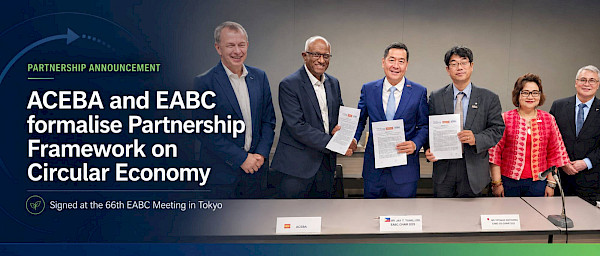
The East Asia Business Council was established in 2003 on the recommendations of the East Asia Study Group, endorsed by ASEAN+3 Leaders. Its creation gave EABC an official mandate to represent the private sector in advancing regional integration and cooperation. The Council is composed of senior business leaders from ASEAN, China, Japan, and the Republic of Korea.
Global Compact Network Philippines is the local entity of the United Nations Global Compact in the Philippines whose primary goal is to help participant companies to align their strategies and operations to the Ten Principles and Sustainable Development Goals.
This publication aims to support Southeast Asian businesses with adopting Circular Economy. Firstly, this involves supporting businesses to navigate the why and what of Circular Economy. Why is Circul...
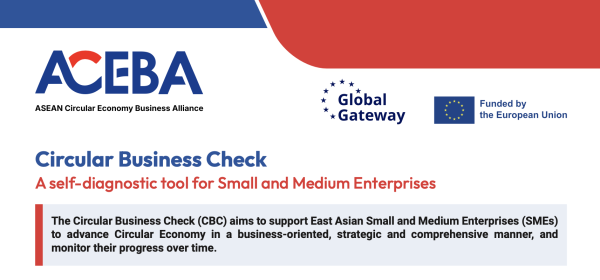
Read More about Unlocking the Circularity Opportunity: guidance to advance circular businessThe Circular Business Check (CBC) aims to support East Asian Small and Medium Enterprises (SMEs) to advance Circular Economy in a business-oriented, strategic and comprehensive manner, and monitor the...
Read More about Circular Business Check: A self-diagnostic tool for Small and Medium EnterprisesAn exploratory analysis of key features and drivers of the circularity initiatives of 75 businesses that were uncovered and documented with the support of EU SWITCH-Asia (https://www.aceba.co/business...
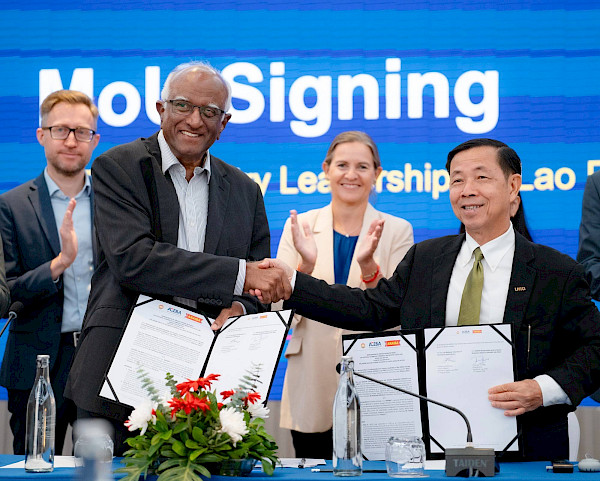
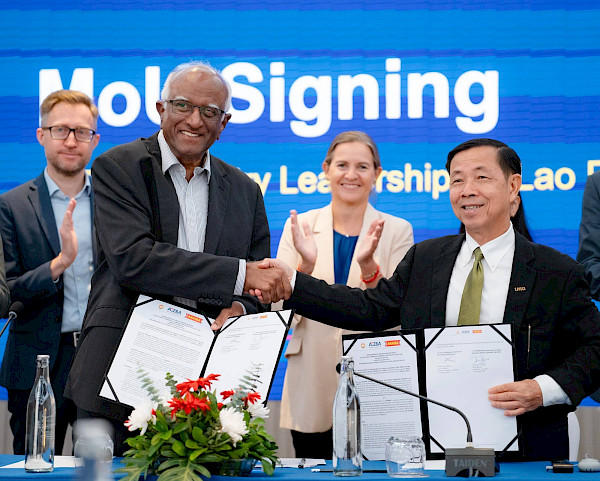
Read More about Circular Economy in Southeast Asia: Insights from an exploratory analysis of 75 business casesACEBA and LNCCI Partnership Launch, Business Forum, and Starter Training in Lao PDR.
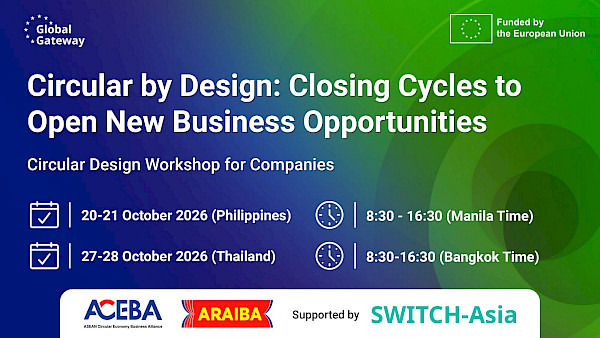
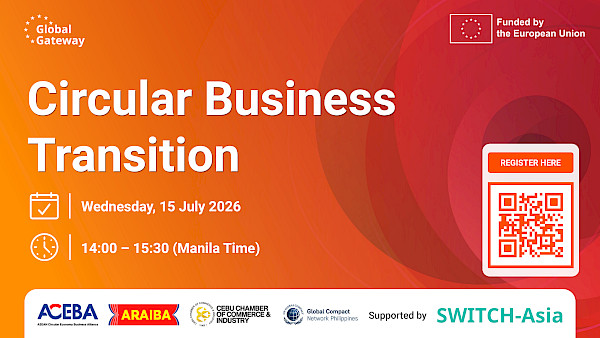
View Detail about Making Circular Economy Work: An Opportunity for Lao BusinessesThis online starter workshop is designed to support small and medium enterprises (SMEs) in the Philippines.
View Detail about Circular Economy Starter Workshop for SMEs in the PhilippinesThis is an on-site event, and advanced registration is required due to limited seating.
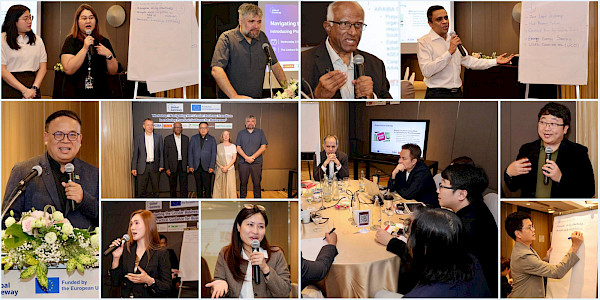
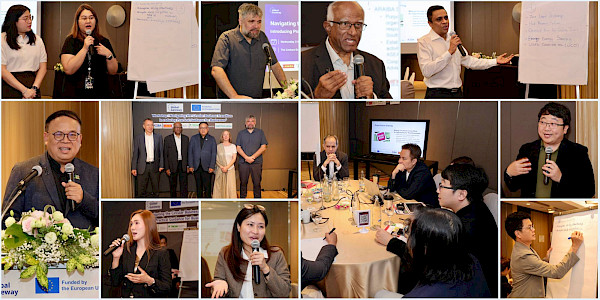
View Detail about Navigating the Circular Business Transition: Introducing Practical Guidance for Thai Businesses