
ACEBA and its Philippine partners call on businesses to lead the transition to a circular economy
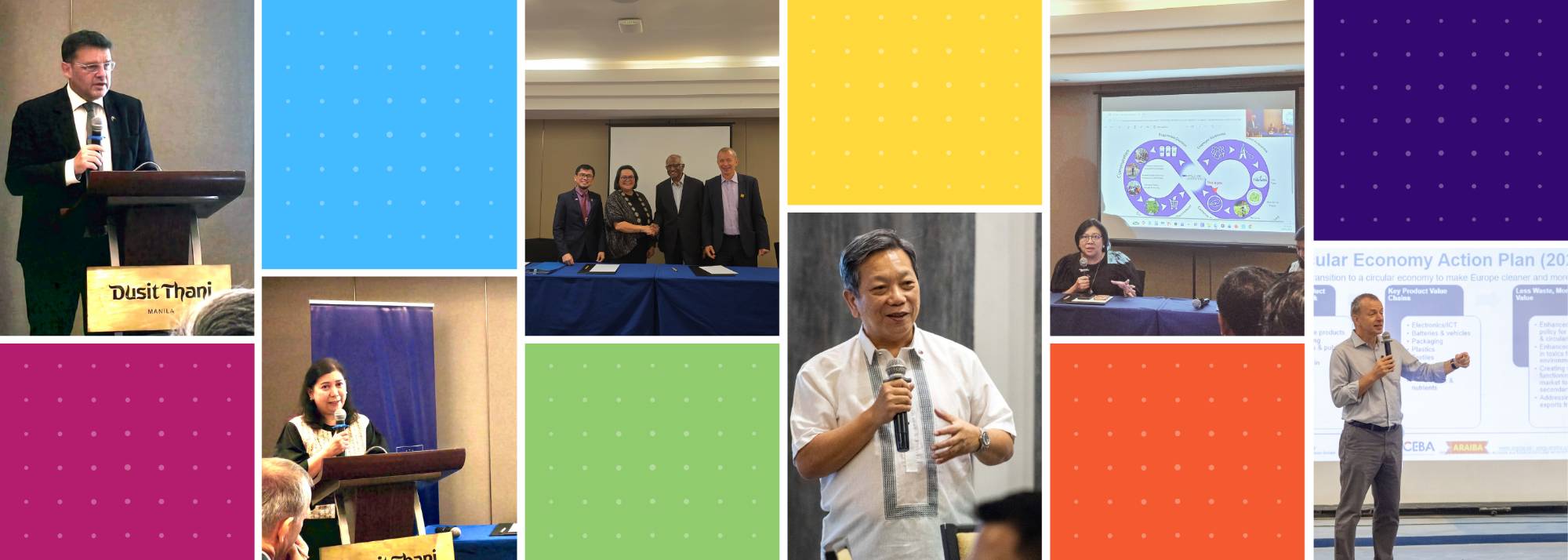
Partnership Launch
The ASEAN Circular Economy Business Alliance (ACEBA) and Global Compact Network Philippines (GCNP) joined forces to call for business leadership in Circular Economy adoption to advance responsible business conduct and the Sustainable Development Goals in the Philippines.
Circular Economy addresses the unsustainable extraction and use of materials and other resources as the root cause of the current triple crises of climate, nature and pollution. It aims to circulate materials in endless use and recovery cycles, use them more efficiently and longer, and maximize the potential of renewable materials and energy. This helps businesses to reduce costs, develop new products and markets, and be prepared for, and help shape, a more circular, low carbon future. Circular Economy is key to hastening progress towards the globally agreed Sustainable Development Goals (SDGs), in particular, sustainable consumption and production (SDG 12), climate action (SDG13), clean water and sanitation (SDG6), and industry, infrastructure and innovation (SDG9).
Strategic Circular Economy Partnerships with ASEAN Businesses
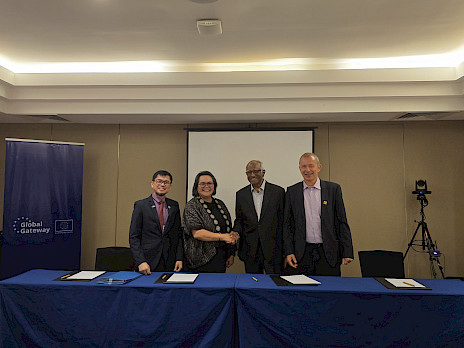
On 28 January, the Global Compact Network Philippines (GCNP) and ASEAN Circular Economy Business Alliance (ACEBA) joined hands in calling for business to lead on Circular Economy. Speaking at their partnership launch event, Mr Thomas Thomas, ACEBA co-convenor introduced,
"Today’s partnership launch entails a call to action for Philippine businesses to lead and accelerate the adoption of circularity practices and thereby advance the Ten Principles of the Global Compact. Together, GCNP and ACEBA want to get more companies committed and acting towards the Circular Economy, through dialogue, networking and learning activities and the uncovering and promotion of Circular Economy business cases."
Ma. Victoria Tan, Chair of the GCNP Board of Trustees, welcomed the opportunity to partner with ACEBA.
"As there is a gap between sustainability intent and action, we need to share what is working for the circularity transition in business, to turn challenges into business cases and lessons learned into roadmaps for others to follow suit. Through this partnership the extensive knowledge resources of ACEBA become available for GCNP companies to learn and advance the circular economy."
Circular economy business opportunities and benefits were further shared by Ms Anna Lagon, co-CEO of Bayo Manila, Ms Lili Fuentes, Chief Operating Officer, Philux Inc and Ms Leah Magallanes, VP Quality and Sustainability SM Hotels and Convention Centres.
Mr Marco Gemmer, Head of Cooperation at the European Union Delegation to Philippines, welcomed the initiative:
"The SDGs can only be achieved with active participation of the private sector. Under its Global Gateway strategy, the EU supports private sector engagement and investment in circularity in partner countries. In the Philippines, Global Gateway supports the EU-Philippines Green Economy Partnership with EUR 60 million EU-funding and the regional SWITCH Asia Programme."
Dr Rene Van Berkel, ACEBA co-convenor and EU SWITCH-Asia Circular Economy expert introduced ACEBA’s 88 Circular Economy business cases, a framework for business action, and an implementation guide for businesses.
These position circular economy as a responsible business and innovation strategy, that enable businesses to perform well, while doing good for the planet and society.
Circular design and circularity practices have enabled Filipino businesses to significantly increase resource efficiency and waste recovery through repurposing, whilst supporting performance and growth of their respective businesses. Successful circular economy practices are also documented by ACEBA in its circular economy business case collection.
With support from the EU-funded SWITCH-Asia Programme, ACEBA and GCNP will promote greater understanding and adoption of Circular Economy among business leaders and entrepreneurs in the Philippines. They will also co-develop Circular Economy knowledge products and jointly host activities to share circular models, tools, and best practices for business. High on the agenda is to facilitate multistakeholder engagement showcasing Circular Economy as a responsible and innovation agenda, and to scale circular solutions in key industries in the country.
Introducing the Partners: ACEBA was launched in 2024 to support the promotion and implementation of the 2021 ASEAN Circular Economy Framework in the region by engaging businesses and business organisations in Circular Economy advocacy, knowledge and experience sharing, adoption of actionable tools and models, and peer-learning/ networking. ACEBA is an ASEAN centric, business leadership initiative launched in 2024 with the support of the ASEAN Secretariat, its Coordinating Committee on Micro, Small and Medium Enterprises, the ASEAN Business Advisory Council and the EU Delegation to ASEAN.
The GCNP is the local network that brings together Philippine companies and non-business stakeholders who have committed to uphold and operationalize the Ten Principles of the United Nations Global Compact, meeting fundamental business responsibilities in the areas of human rights, labour, environment, and anti-corruption.
Circular Economy is a practical way to improve business performances across all these four domains, as has already been documented by ACEBA in the 88 practical cases from businesses in Philippines and Southeast Asia.
First in-country training on Circular Economy for Business in Cebu
On 27 January 2026, ACEBA’s country lead, the Cebu Chamber of Commerce and Industry (CCCI), conducted the first in-country training on “Circular Economy for Business”, in Cebu.
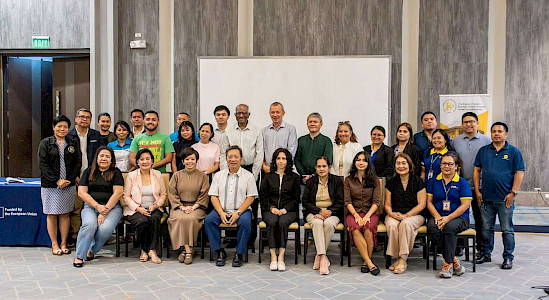
The training provided a comprehensive introduction and overview of Circular Economy for business—from concepts, design strategies, business models, policies and standards to application in businesses in the Philippines and in other ASEAN countries. The training also covered ACEBA’s “SADI Framework” (Stocktake – Ambition – Delivery - Integration) that guides businesses to circularize their products, operations, inputs and outputs. Participants representing food processing, hospitality, metal, ship building and other manufacturing sectors got acquainted with approaching Circular Economy as a responsible business and innovation strategy. The training highlighted the rigour and diversity of the different models and applications of circular economy, demonstrating the value for companies to undertake the path towards circular economy.
These partnerships and initiatives are aligned with key programmes supported by the European Union in the Philippines. Circular Economy is a pillar of EU SWITCH-Asia projects implemented in the Philippines, and is an important objective of the EU-Philippines Green Economy Partnership, an EU flagship initiative and strategy aiming to advance the green transition in the Philippines.
For more information visit: www.aceba.co
Contact: [email protected]
Share: